

Breast implant options matched to your frame
Medically reviewed by Dr. T. Y. Steven Ip, MD, FACS, board certified plastic surgeon Updated
Silicone or saline, the incision, where the implant sits, and its profile, density and size. Dr. Ip shows you all the different breast implant products at your consultation and helps you choose at your pre-op visit.

Silicone vs. saline breast implants
Both have a silicone shell. What fills it changes how the implant looks and feels, who it is approved for, and how a rupture shows.
Silicone breast implants
A silicone shell that encases a cohesive silicone gel
FDA approved for women 22 years or older
Appears and feels more like natural breast tissue
Less prone to visible implant wrinkles, rippling, or edges
Saline breast implants
A silicone shell filled with a saltwater solution
FDA approved for women 18 years or older
Easily identifiable implant ruptures
More likely to develop visible wrinkles and rippling
Incisions for breast augmentation
Where the incision goes decides where your scar will be. Dr. Ip recommends the incision that suits your anatomy.
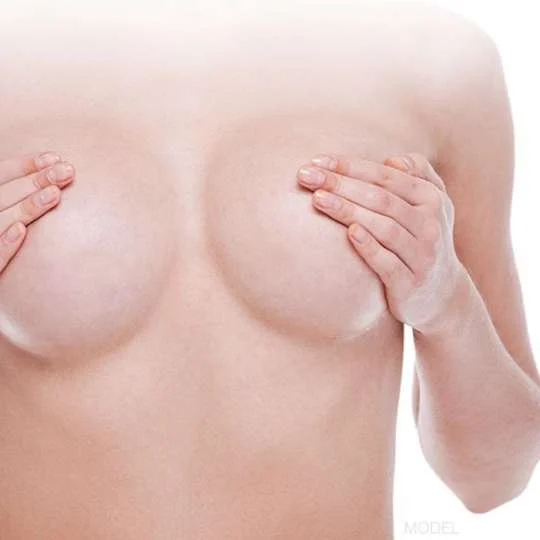
Inframammary incision
The inframammary incision for breast augmentation runs along the lower breast crease and may result in visible scarring if there is little lower breast tissue.
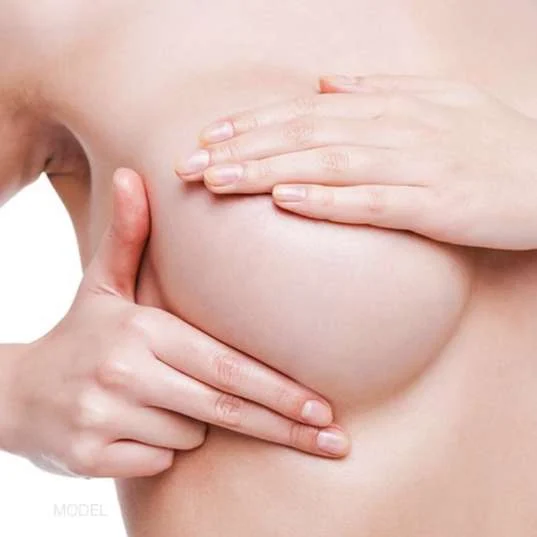
Peri-areolar incision
The peri-areolar incision for breast augmentation is created around the outer edge of the areolas and may result in mild visible scarring.
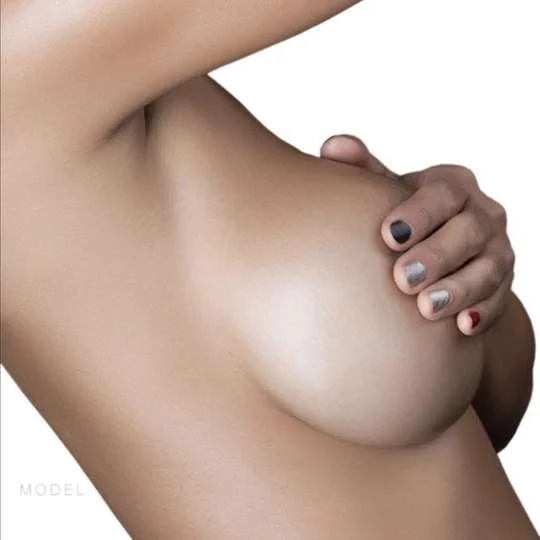
Transaxillary incision
The transaxillary incision for breast augmentation is placed in the armpits, resulting in no visible scarring on the breasts.
Placement of your breast implants
Implants can sit under the chest muscle, above it, or in a dual plane, depending on your body and how you use your chest muscles.
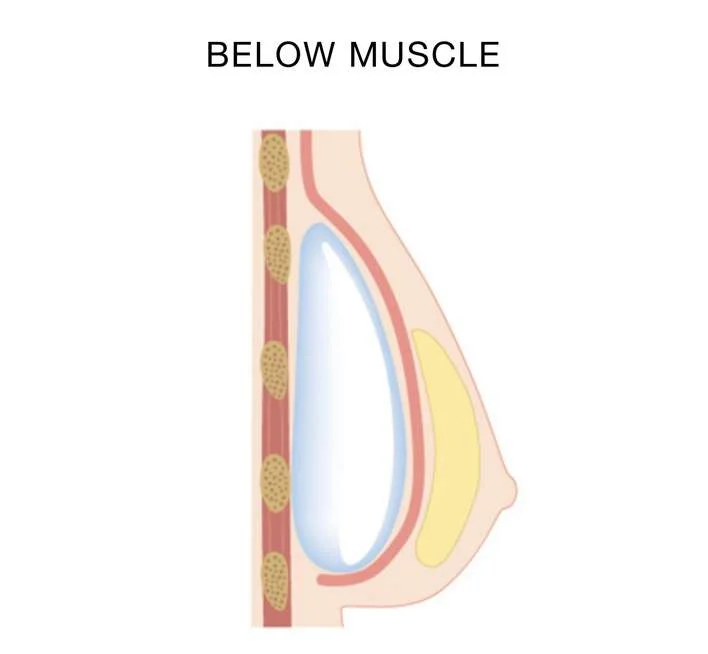
Under the muscle (submuscular)
Most patients will have breast implants placed under the pectoralis muscle. It allows for better coverage and less internal scarring around the breast implants.
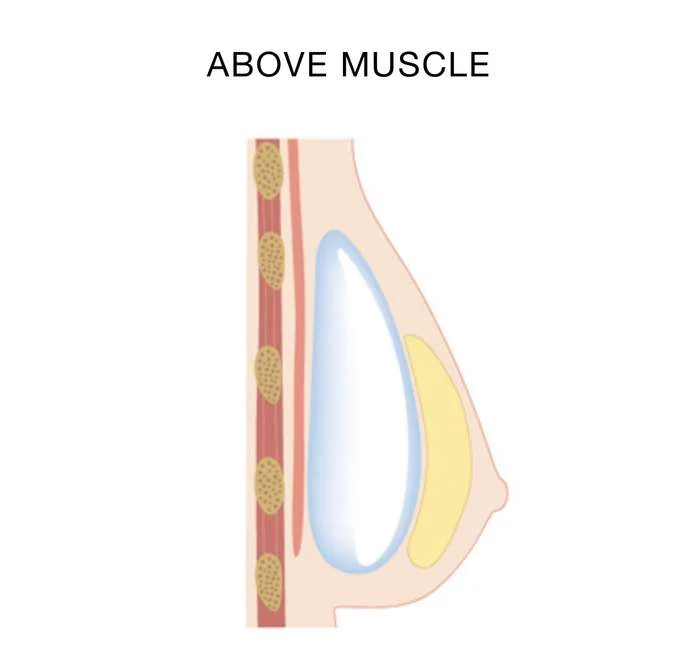
Above the muscle (subglandular)
Most patients who are athletic and require aggressive use of their chest muscles prefer the breast implants above the muscle.
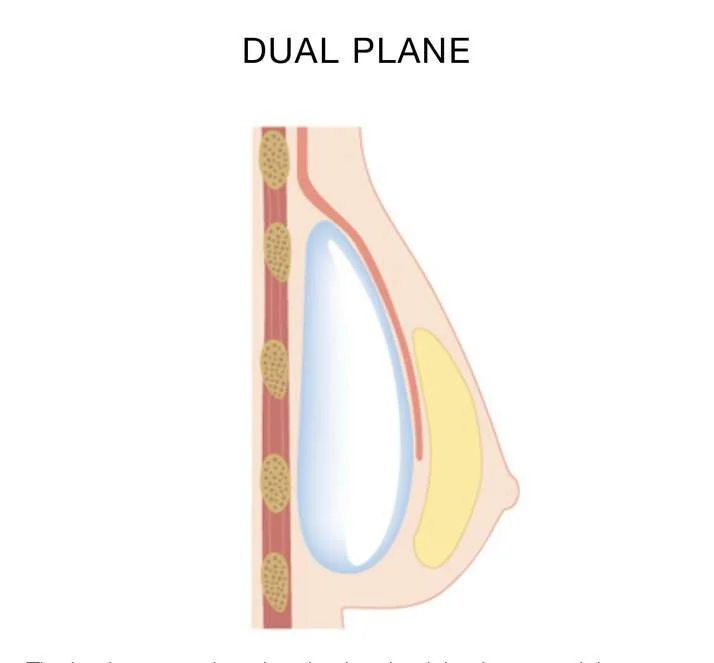
Dual plane
The dual plane placement is used for patients who have slight drooping. It allows the breast implant to drop into the position of the breast pocket.
Breast implant profiles, density and size
Breast implant profile
The profile determines the correlation between the implant’s base width and height. Traditional breast implant profiles are as follows:
- Low
Useful for women desiring minimal projection (these are the least common option).
- Moderate
Useful for women with broad chest walls.
- High or Full
Useful for patients with thin chest walls (these are the most commonly used implants). These provide upper pole fullness throughout the life of the implant.
- Extra High or Extra Full
Useful for patients who desire larger implants and increased upper pole fullness.
The implant profile chosen should take into account the size and shape of a woman’s natural breast as well as her physical build, such as shoulder and chest width.
Breast implant density
The silicone breast implants are made with cohesive gel. The gel is made in different densities. The softer gel implants allow for a more natural droop and look. The denser or more firm gel implants provide more structure and keep their shape.
Breast implant size
There are multiple factors that go into determining implant size. Some of these factors include your current measurements, characteristics, and the size of your chest wall. Breast implants can be as small as 110cc to 800cc. While we often recommend implants that will be in proportion with your body frame, your personal desires and goals will be taken into account.
Breast implant questions, answered
Silicone or saline, incisions, placement, profile and size, in plain words.
Silicone implants are a silicone shell holding cohesive silicone gel; they look and feel more like natural breast tissue. Saline implants are a silicone shell filled with saltwater; ruptures are easy to identify, but they are more likely to show wrinkles and rippling.
Saline implants are FDA approved for women 18 or older, and silicone implants for women 22 or older.
It depends on your anatomy. The inframammary incision runs along the lower breast crease, the peri-areolar incision goes around the outer edge of the areola, and the transaxillary incision is placed in the armpit, leaving no visible scar on the breast.
Most patients have implants placed under the pectoralis muscle for better coverage and less internal scarring. Athletic patients who use their chest muscles heavily often prefer above the muscle, and dual plane placement suits slight drooping.
Profile is the relationship between an implant's base width and its projection. Low profile gives minimal projection, moderate suits broad chest walls, high or full suits thin chest walls and is the most common, and extra high gives larger implants more upper pole fullness.
Implants range from 110cc to 800cc. Size depends on your measurements, breast characteristics and chest wall, and Dr. Ip recommends a size in proportion to your frame while taking your goals into account. You choose your implants with him at your pre-op appointment.
Breast implants can last a long time and do not need to be replaced every 10 years. If you are free from pain and happy with how you look, there is likely no reason to exchange them; see your board-certified plastic surgeon if you notice changes. The FDA notes that breast implants are not considered lifetime devices, so plan on regular follow-up visits with your plastic surgeon.
Loss of breastfeeding happens in about five to eight percent of elective cosmetic breast augmentations, and 12 to 15 percent when a breast lift or reduction is involved.
See implant results from Dr. Ip's patients
Browse breast augmentation before and after photos with each patient's height, weight, cup change and implant size.
Choose your implants with Dr. Ip
Meet Dr. Ip in Newport Beach, Beverly Hills or Manhattan. Send a request and the office will contact you, or call to book.
(949) 548-0300Monthly payment plans available. See financing options